You Can Turn a Grocery-Store Mushroom Into a Vitamin D Source
Fifteen minutes of sunlight before you cook them meaningfully changes what's on your plate.
Most mushrooms sold in grocery stores are grown in the dark and contain almost no vitamin D. That's fixable in your own kitchen, with nothing more than sunlight.
Key Findings
- Mushrooms contain ergosterol, which converts to vitamin D2 when exposed to UV light
- A 10g/day dose of UV-treated mushrooms for four weeks raised vitamin D status roughly six-fold
- A 100g dose produced a roughly 10-fold rise in vitamin D status
- Gill-side-up exposure for 15-30 minutes is enough for conversion
The same reaction that happens in skin
Mushrooms contain ergosterol, a provitamin D compound — the fungal equivalent of the 7-dehydrocholesterol your skin uses to make vitamin D from sunlight. When ergosterol is exposed to UV light, it converts to vitamin D2 (ergocalciferol), a form your body can use.1
What a 2025 exposure study found
A 2025 controlled study found that adults consuming 10g/day of UV-treated mushrooms for four weeks saw serum vitamin D status rise roughly six-fold; a 100g dose produced a roughly 10-fold rise.2 Earlier work showed the resulting vitamin D2 is bioavailable and supports bone mineralization in animal models without evidence of toxicity.3
Why gill-side matters
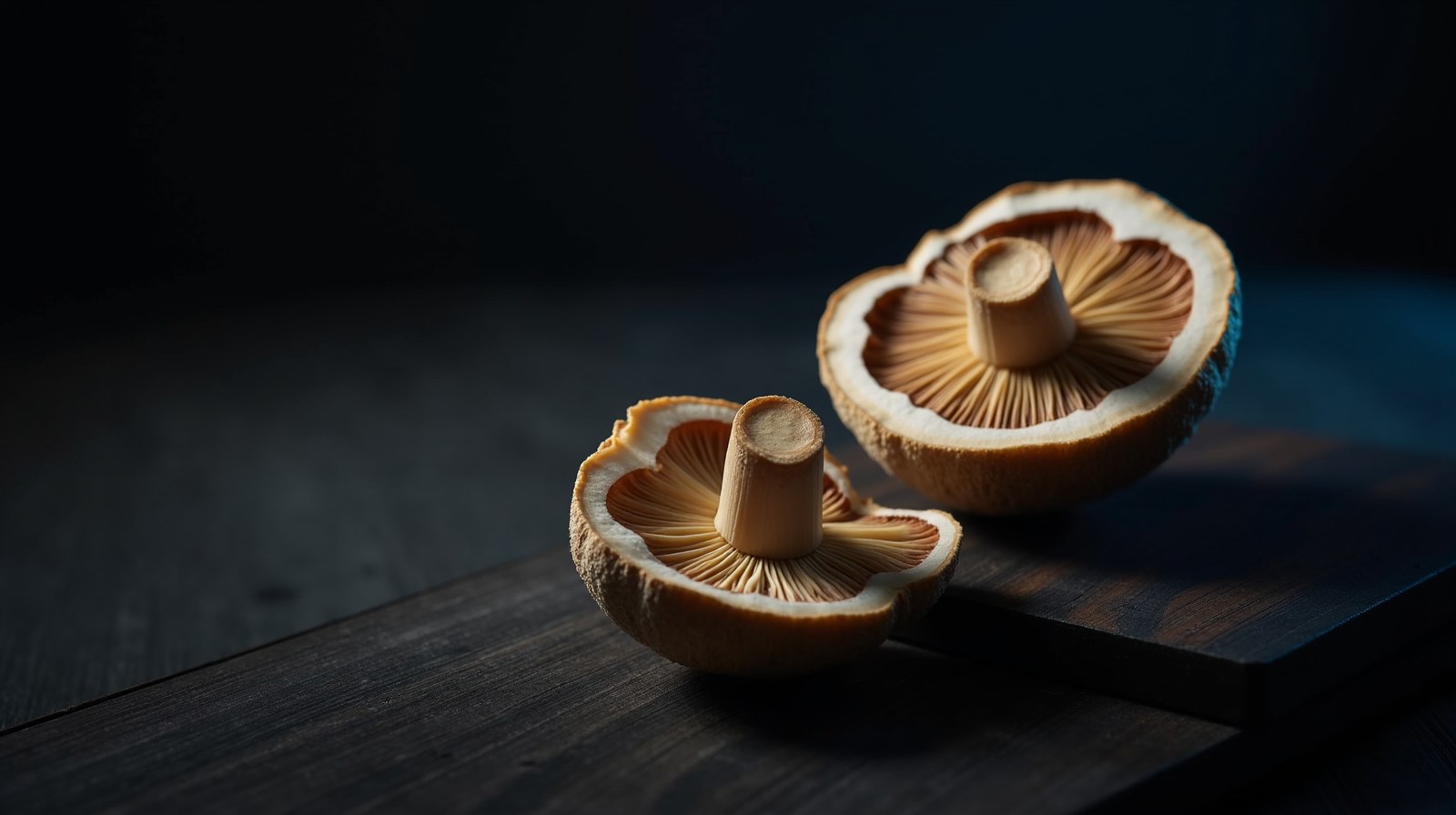
Ergosterol sits in the gills and cap tissue. Placing mushrooms gill-side-up in direct sunlight for roughly 15-30 minutes exposes that tissue directly, rather than the smoother, less-permeable cap skin — and the conversion happens quickly since UV-induced ergosterol conversion doesn't require prolonged exposure the way skin synthesis does.
The practical takeaway
- Sliced or whole mushrooms, gill-side up, 15-30 minutes of direct sun before cooking
- The effect is dose-dependent — more mushrooms, more sun-exposed surface, more D2
- This isn't a replacement for blood-level testing if you have a diagnosed deficiency, but it's a real, free upgrade to a food already in most kitchens
Sources
- "UV-Induced Nutritional Transformation of Mushrooms: From Molecular Shifts to Health Outcomes." ScienceDirect, 2025. sciencedirect.com
- "Effect of Ultraviolet Light–Exposed Mushrooms on Vitamin D Status." ScienceDirect. sciencedirect.com
- "Vitamin D from UV-Irradiated Mushrooms as a Way for Vitamin D Supplementation: A Systematic Review." PMC. pmc.ncbi.nlm.nih.gov