The Rosemary Compound Now Headed to Human Alzheimer's Trials
Rosemary and sage share a compound that was too unstable to use as a drug — until researchers fixed that.
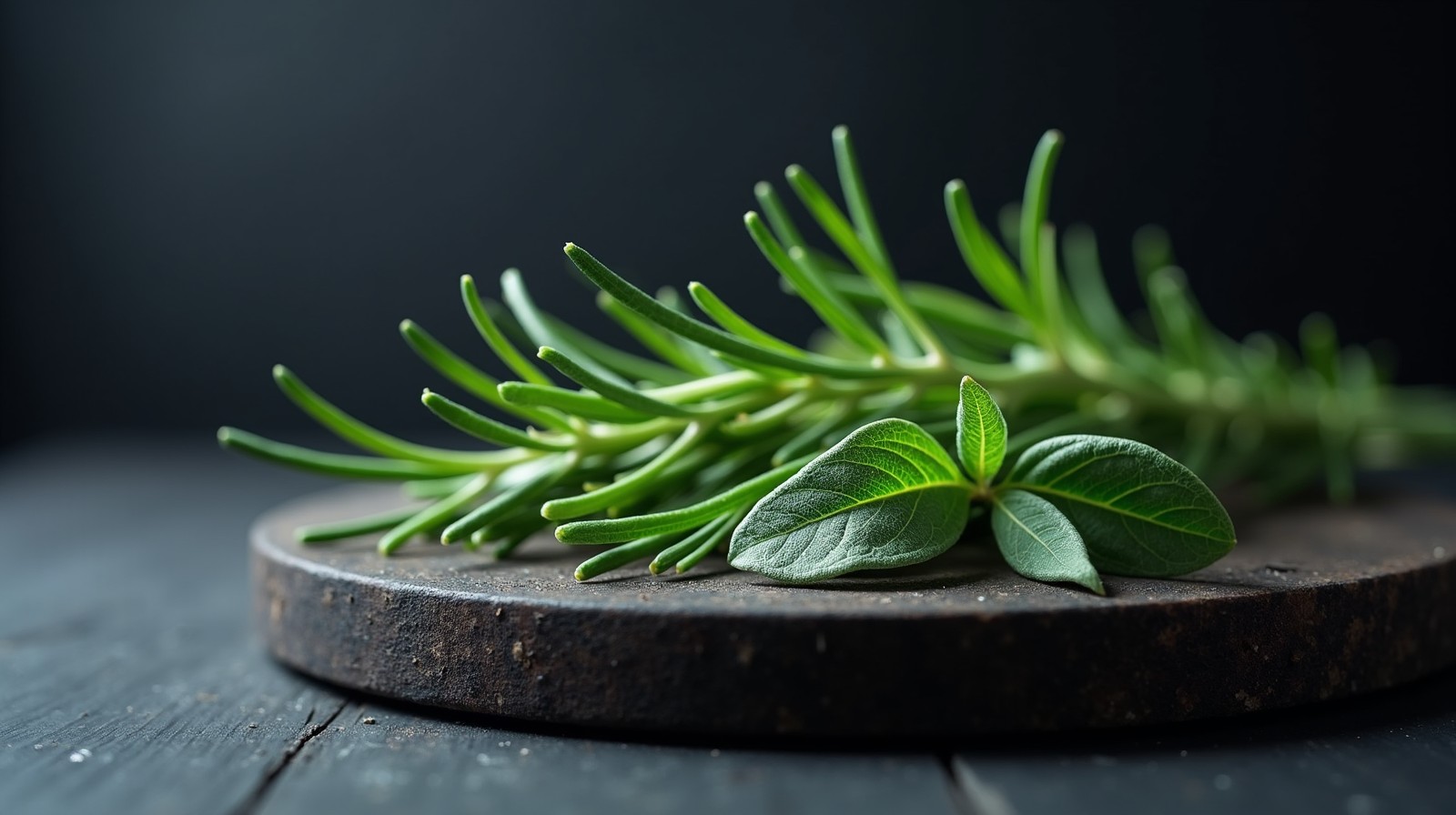
"Rosemary for remembrance" is an old phrase, but the compound behind it has become an active subject of Alzheimer's research. Both rosemary and sage contain carnosic acid, an antioxidant and anti-inflammatory compound that protects brain cells from the kind of damage linked to Alzheimer's disease.
Key Findings
- Scripps Research created diAcCA, a stable pro-drug version of carnosic acid, published in Antioxidants in early 2025
- In a mouse model, diAcCA improved spatial learning and memory, and reduced amyloid-beta and tau, the proteins linked to Alzheimer's
- The compound is only activated by inflammation itself, concentrating its effect in already-damaged brain areas
- Carnosic acid is already on the FDA's "generally regarded as safe" list, which should speed human trials
The problem researchers had to solve first
Pure carnosic acid is too chemically unstable to work as a drug on its own. Researchers at Scripps Research synthesized a stable version called diAcCA, which converts fully into carnosic acid in the gut before entering the bloodstream. Findings were published in the journal Antioxidants in early 2025.1
What it did in preclinical testing
In a mouse model of Alzheimer's disease, diAcCA treatment led to improved spatial learning and memory on standard behavioral tests, increased synaptic connections in the brain, and reduced levels of amyloid-beta and tau — the two proteins most associated with Alzheimer's pathology.2 One notable design feature: the compound is only activated by inflammation itself, meaning it concentrates its effect specifically in already-damaged areas of the brain rather than acting uniformly everywhere.
Why human trials should move relatively fast
Carnosic acid is already on the FDA's "generally regarded as safe" list, since it's naturally present in a common cooking herb. That existing safety profile is expected to speed up the path to human clinical trials compared to a completely novel compound.
What's already established, separate from this new research
This isn't the first time these herbs have shown up in cognitive research. Older, smaller clinical studies already found low-dose rosemary improved speed of memory compared to placebo, and separate research found sage improved cognitive performance and alertness — a longer track record than most people realize for two spice-rack staples.
The practical takeaway
- The diAcCA drug research is still preclinical — it's not an approved treatment, and cooking with rosemary isn't equivalent to a therapeutic dose
- The older, smaller human studies on whole rosemary and sage found modest but real memory and alertness effects at low doses
- Worth watching, not acting on yet — human Alzheimer's trials for diAcCA specifically are the next real test
Sources
- "Compound found in common herbs inspires potential anti-inflammatory drug for Alzheimer's disease." ScienceDaily, 2025. sciencedaily.com
- "diAcCA, a Pro-Drug for Carnosic Acid That Activates the Nrf2 Transcriptional Pathway, Shows Efficacy in the 5xFAD Transgenic Mouse Model of Alzheimer's Disease." NCBI. pmc.ncbi.nlm.nih.gov