When You Eat a Kiwi Might Matter More Than If You Eat One
The timing detail buried in the actual studies gets left out of most "kiwi for sleep" claims.
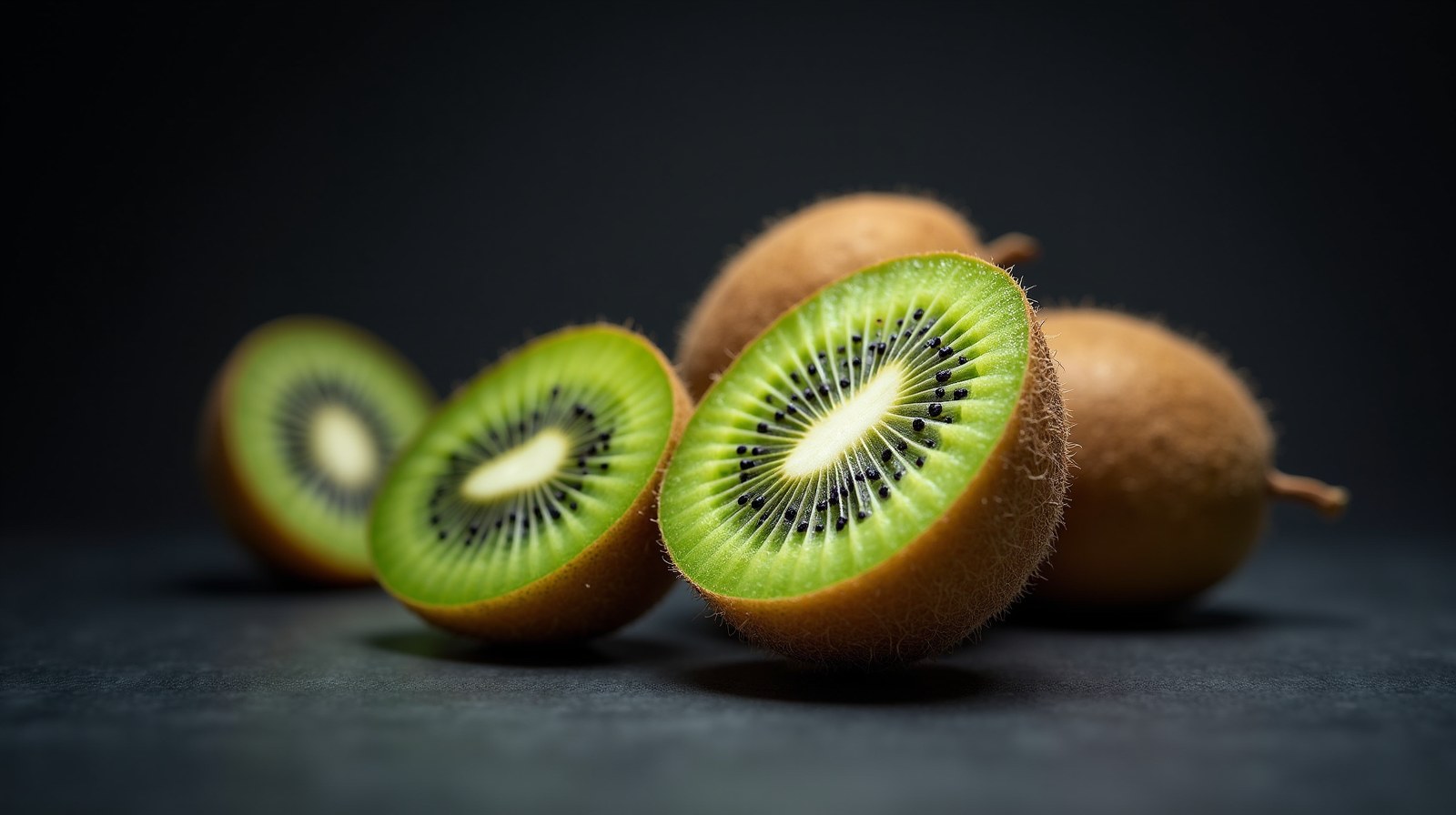
Kiwifruit gets recommended for sleep fairly often. What usually gets dropped from that advice is when the studies actually had people eat it.
Key Findings
- Green kiwifruit's actinidin enzyme produces an earlier peak in circulating amino acids after a meal
- Kiwifruit eaten with the evening meal increased urinary 5-HIAA, a serotonin metabolite
- Trials typically used two kiwis as the tested amount
- The evening-meal protocol was linked to measurable improvements in sleep quality and mood
An enzyme that speeds up digestion
Green kiwifruit contains actinidin, a protein-digesting enzyme. Research shows kiwifruit containing active actinidin produces an earlier peak in circulating amino acids after a meal compared to kiwifruit without it — meaning the amino acids get into your bloodstream faster.1
The serotonin connection
Kiwifruit is also naturally rich in the amino acids that feed serotonin production — including tryptophan — plus some serotonin itself. Serotonin is the direct precursor your body converts into melatonin, the hormone that regulates the sleep-wake cycle.
What the trials actually tested
Controlled studies found that eating kiwifruit — fresh or dried — with the evening meal increased urinary concentration of 5-HIAA, a serotonin metabolite, compared to a water control.2 That same protocol was associated with measurable improvements in sleep quality and mood, in both people with good sleep and people with existing sleep problems.3
The practical takeaway
- The research tested kiwifruit eaten with dinner — not as a random daytime snack
- Two kiwis is the amount typically used across these trials
- This is a mild, food-based effect, not a substitute for addressing chronic sleep issues with a clinician
Sources
- "Effect of Kiwifruit Actinidin on Plasma Amino Acid Kinetics." Frontiers in Nutrition. frontiersin.org
- "Acute effects of fresh versus dried Hayward green kiwifruit on sleep quality, mood, and sleep-related urinary metabolites." Frontiers in Nutrition. frontiersin.org
- "Effect of kiwifruit consumption on sleep quality in adults with sleep problems." PubMed. pubmed.ncbi.nlm.nih.gov