A Spice Matched Antidepressants in a 2025 Meta-Analysis
A common spice performed statistically the same as prescription antidepressants in a pooled analysis — with fewer side effects.
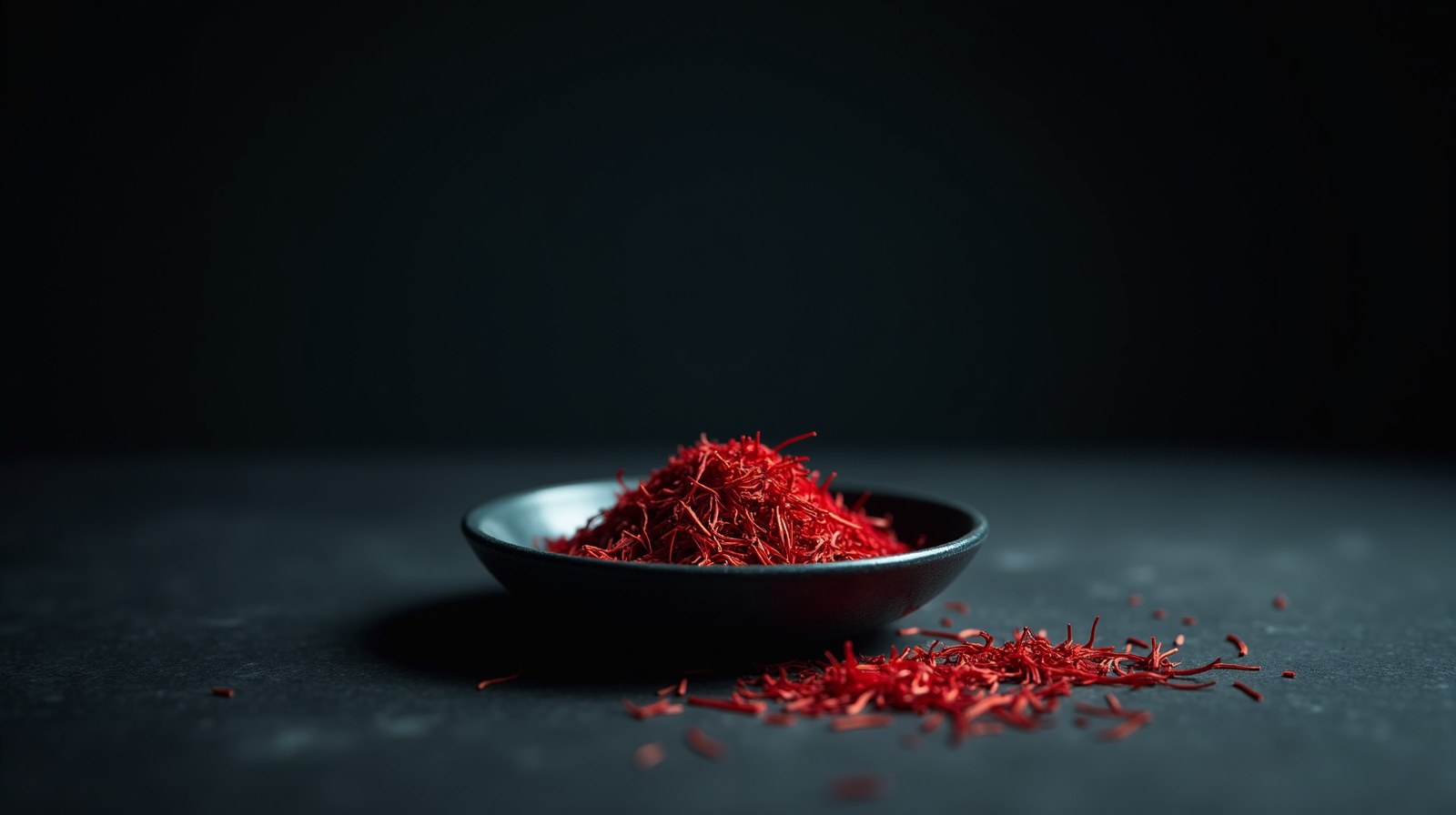
Saffron's active compounds — crocin and safranal — appear to modulate serotonin activity and have antioxidant and anti-inflammatory effects on brain tissue, working toward a broadly similar endpoint as SSRIs through a different mechanism.
Key Findings
- No significant difference in symptom reduction between standardized saffron extract and SSRIs across 12 trials
- Saffron users reported 23% fewer side effects — less nausea, vertigo, and sexual dysfunction
- The tested dose was specific: ~30mg/day of standardized extract, not culinary saffron
- Findings apply to mild-to-moderate depression and anxiety only
The 2025 meta-analysis
A 2025 meta-analysis pooling 12 randomized controlled trials and 728 participants compared standardized saffron extract to SSRIs — including fluoxetine and sertraline — for mild-to-moderate depression and anxiety. It found no statistically significant difference in symptom reduction between the two.1 Saffron users also reported roughly 23% fewer adverse effects overall, with less nausea, vertigo, and sexual dysfunction than the SSRI group.
The dose that was actually studied
Most trials used a standardized saffron extract at approximately 30mg per day, typically split into two doses.2 That's a specific, concentrated extract — nowhere close to what a pinch of saffron in cooking would deliver.
What this doesn't mean
This is not evidence for replacing a prescribed antidepressant with saffron on your own. It's evidence that a specific standardized extract, at a specific dose, performed comparably to SSRIs in trials of mild-to-moderate depression and anxiety — a narrower and more specific finding than "saffron helps with depression."
The practical takeaway
- Talk to a doctor before adding saffron extract alongside or instead of any prescribed medication — there can be interaction risks
- The research is specific to standardized extracts around 30mg/day, not culinary saffron
- This applies to mild-to-moderate cases in the studied trials — not a general claim across all severities of depression
Sources
- "Effect of Saffron Versus Selective Serotonin Reuptake Inhibitors (SSRIs) in Treatment of Depression and Anxiety: A Meta-analysis of Randomized Controlled Trials." Nutrition Reviews, 2025. academic.oup.com
- "Effect of saffron extract supplementation on mood in healthy adults with subclinical symptoms of depression." American Journal of Clinical Nutrition. ajcn.nutrition.org