A 2025 Heart Trial Found This Compound in the Onion Layer You Peel Off
The part of a red onion most people discard turns out to carry most of a compound now in real clinical trials.
Quercetin is a flavonoid found throughout onions, but concentration varies enormously by variety and by which part of the onion you're eating — and it's currently one of the more actively researched compounds in aging and cardiovascular science.
Key Findings
- Quercetin cut post-heart-surgery atrial fibrillation risk to 4% of patients, versus 18% on placebo
- Quercetin acts as both a "senolytic" and a "senomorphic," clearing aging cells and suppressing their inflammatory signals
- A separate pilot trial combining quercetin with dasatinib found improved cognitive scores in older adults at risk for Alzheimer's
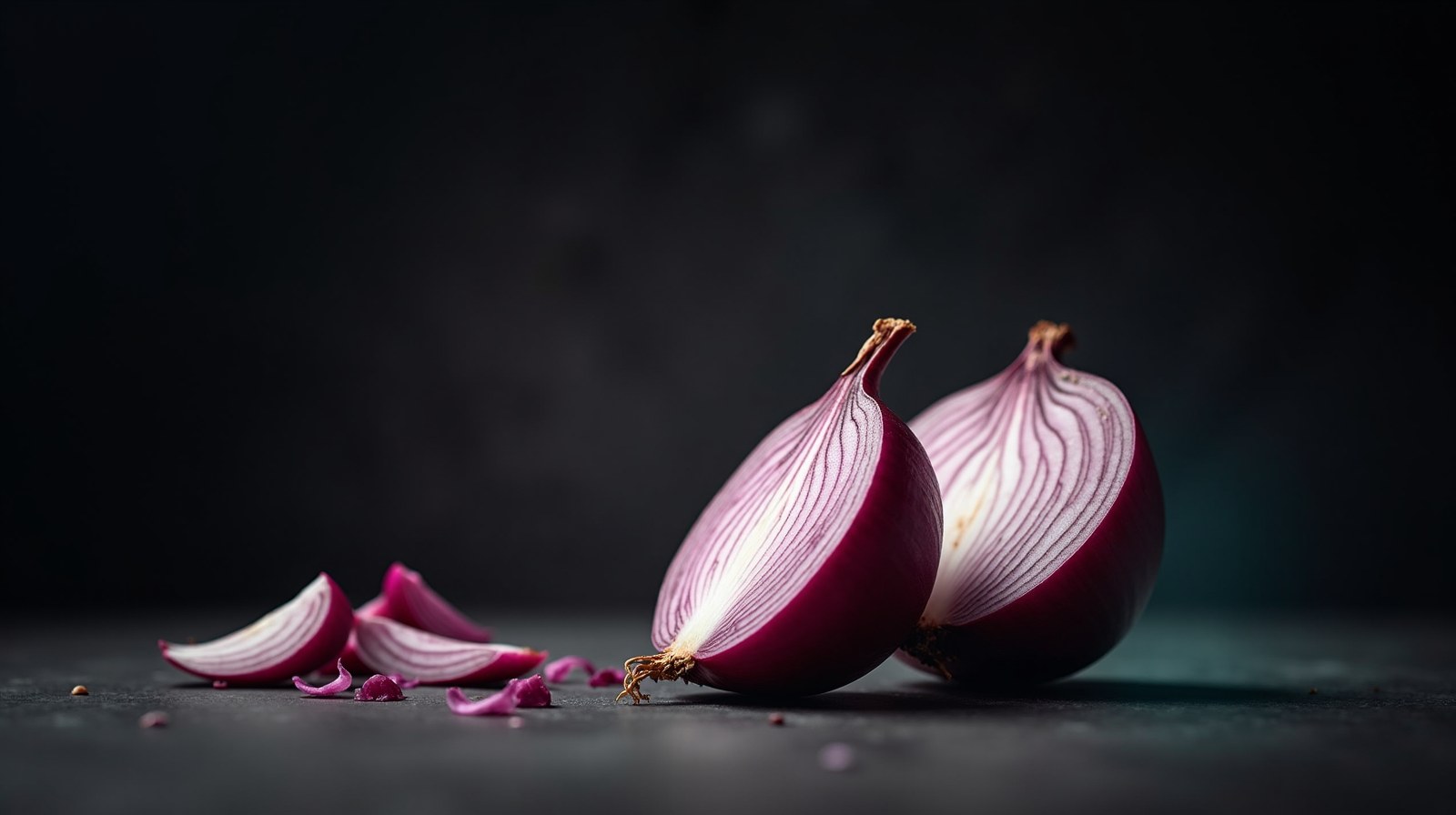
- Red onions' outer, deeply pigmented layers carry far more quercetin than the pale inner rings
The July 2025 heart-surgery trial
A Canadian clinical trial found quercetin supplementation reduced the risk of post-operative atrial fibrillation — a common and serious complication after heart surgery — to just 4% of patients, compared to 18% in the placebo group.1 That's a substantial difference for a single supplemented compound in a surgical population.
What quercetin is actually doing
Quercetin acts as both a "senolytic" — helping clear out aging, dysfunctional cells that accumulate in tissue over time — and a "senomorphic," suppressing the inflammatory signals those cells release. That dual mechanism is part of why it's drawn broader research interest beyond this one trial; a separate 2025 pilot trial combining quercetin with the drug dasatinib found improved cognitive scores in older adults at risk for Alzheimer's, though that combination involved a pharmaceutical partner, not food-level quercetin alone.2
Where it's concentrated in the onion
Red onions, and specifically their outer, more deeply pigmented layers, contain the highest quercetin concentrations of common onion varieties. The pale, tightly-wound inner rings most people are left with after peeling away the outer layers carry meaningfully less.
The practical takeaway
- This trial used a supplement-level dose, not a food-level claim — it doesn't mean eating onions replicates the heart-surgery result
- Still, if quercetin from food is the goal, don't peel red onions down to the palest inner rings — leave more of the outer layer
- Light cooking preserves more quercetin than boiling
Sources
- "A Natural Senolytic Supplement Curbs Heart Aging in New Clinical Trial." National Academy of Sciences Communications (NAD), July 2025. nad.com
- "Quercetin (supplement)." Alzheimer's Drug Discovery Foundation, Cognitive Vitality, 2025. alzdiscovery.org