Raw Tomatoes Are the Worst Way to Get Lycopene
The compound is locked inside the cell wall — cooking with fat is what actually frees it.
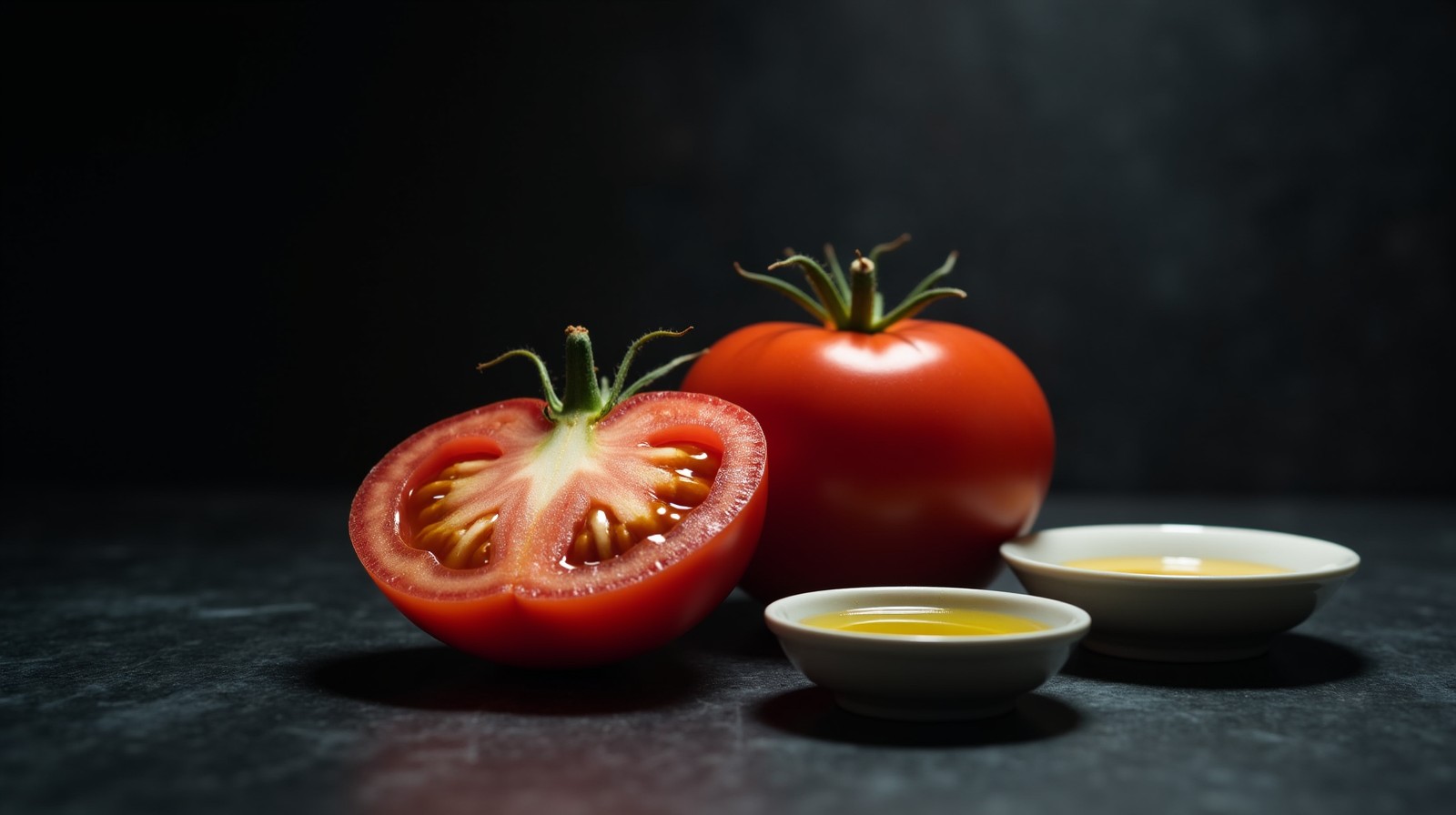
Lycopene is the compound behind a tomato's red color, and it's one of the more consistently studied antioxidants in nutrition research. But in raw tomatoes, most of it is locked inside a rigid plant cell structure your digestive system can't easily break down.
Key Findings
- Heating tomato pulp with oil at 120°C increased bioavailable cis-lycopene by nearly 40% versus unheated controls
- Cooking tomatoes with olive oil raised plasma lycopene — the amount measured in blood — by 82%
- Cooking the same tomatoes without oil produced no significant increase at all
- Lycopene is fat-soluble, so heat alone isn't enough — a fat source is needed for absorption
What heat actually does
A 2026 review of lycopene phytochemistry found that heating tomato pulp with a small amount of added oil at 120°C increased the proportion of a more bioavailable form of lycopene — cis-lycopene — by nearly 40% compared to unheated controls.1 Heat physically breaks down the cell walls holding lycopene in place, releasing it from the plant tissue.
The oil isn't optional
Heat alone isn't the whole mechanism. One human study found cooking tomatoes with olive oil raised plasma lycopene — the amount actually measured in the blood — by 82%. Cooking the same tomatoes without any oil produced no significant increase at all.2 Lycopene is fat-soluble; once heat frees it from the cell wall, it still needs a fat source to dissolve into before your gut can absorb it.
The practical takeaway
- Cook tomatoes rather than eating them raw if lycopene is the goal — heat is step one, not optional
- Add a fat source (olive oil is what most of the research uses) — without it, cooking alone barely moves the needle
- Tomato sauce, paste, and soup — the most-cooked, most-often-oiled preparations — are consistently the highest-lycopene forms in the research, ahead of fresh tomatoes
Sources
- "Tomato-Derived Lycopene: From Phytochemistry and Extraction Technologies to Bioavailability and Nutraceutical Applications." MDPI. mdpi.com
- "Lycopene from heat-induced cis-isomer-rich tomato sauce is more bioavailable than from all-trans-rich tomato sauce in human subjects." PubMed. pubmed.ncbi.nlm.nih.gov