Chia's Real Effect Isn't the Omega-3s
The effect people actually notice — fuller, steadier blood sugar — comes from something else entirely: what the seed does in water.
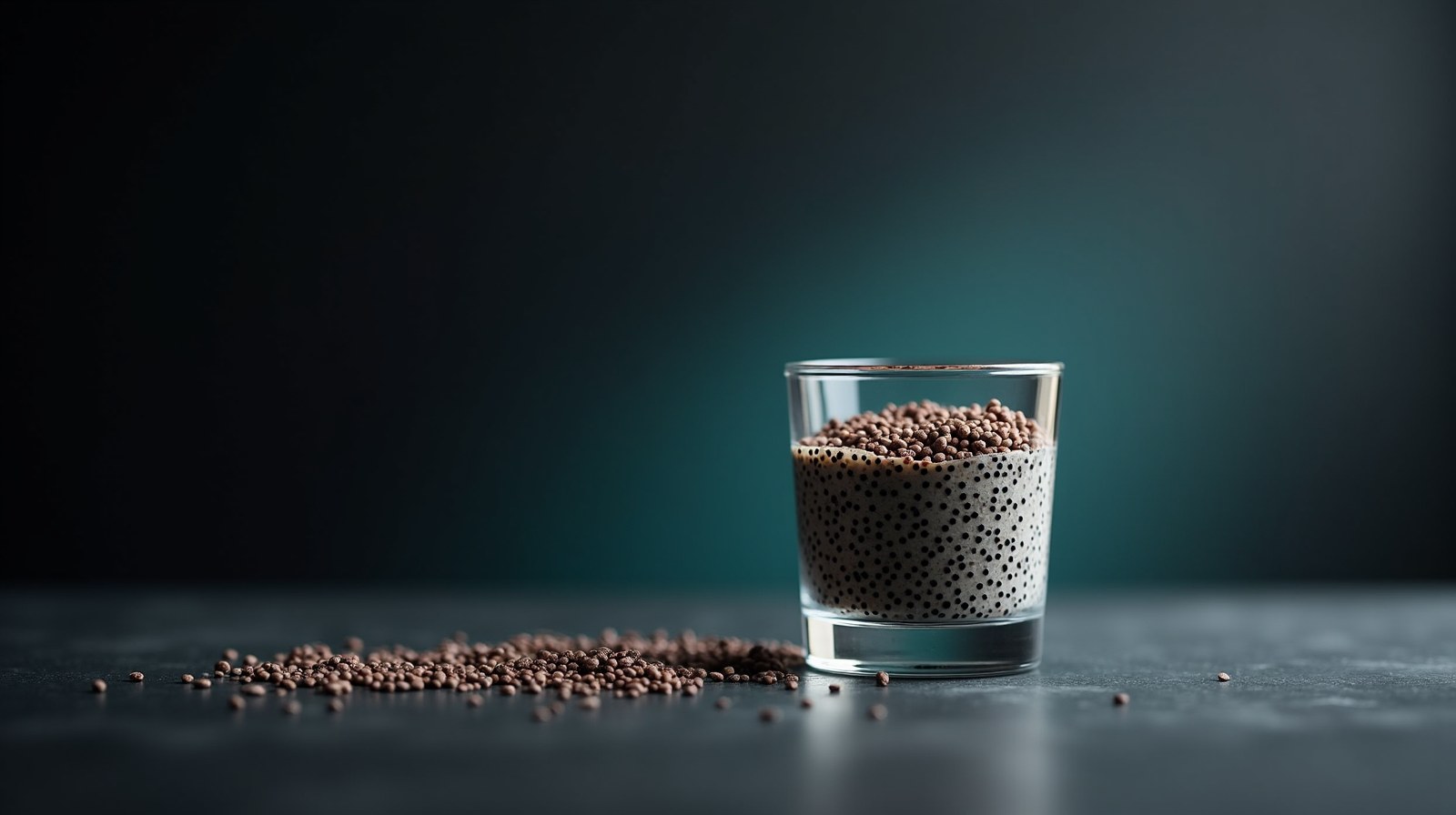
Chia seeds are usually marketed around their omega-3 content, but the effect most people notice — feeling fuller, steadier blood sugar after a meal — comes from a completely different property: the mucilage the seed coat releases in water.
Key Findings
- Chia's coat absorbs up to 12 times its weight in water, forming a thick gel
- That gel blunted post-meal blood sugar spikes by 20-30% in controlled studies
- It also measurably increased fullness and reduced later food intake
- The effect only works if seeds soak for 10-15 minutes first — dry chia skips it
The gel-forming mechanism
Chia's outer coat releases a soluble-fiber mucilage that can absorb up to 12 times the seed's own weight in water, forming a thick gel. That gel physically slows gastric emptying and blunts how fast glucose from a meal enters the bloodstream — a mechanical effect, distinct from flaxseed's lignan-based hormone mechanism.1
What controlled studies found
Controlled studies found the chia gel reduced post-meal blood glucose spikes by 20-30% and increased subjective fullness scores compared to control meals. A randomized controlled trial adding chia to yogurt found it measurably reduced short-term food intake at a later meal, and a crossover study found chia reduced glycemic response while increasing satiety in healthy adults.2
The detail that determines whether it works
The gel-forming effect requires the seeds to actually absorb liquid before you eat them. Chia soaked in liquid for at least 10-15 minutes — pudding-style, or stirred into a smoothie or yogurt ahead of time — delivers the tested mechanism. Dry chia sprinkled on top of food right before eating doesn't get the same chance to gel before it's swallowed.
The practical takeaway
- Soak chia at least 10-15 minutes before eating — pudding-style or pre-mixed into a drink or yogurt
- Dry chia sprinkled on top of a meal right before eating largely misses the studied mechanism
- The omega-3 content is real but secondary — the fiber-gel effect is what the fullness/blood-sugar research is actually about
Sources
- "Chia seeds (Salvia hispanica L.): A therapeutic weapon in metabolic disorders." PMC. pmc.ncbi.nlm.nih.gov
- "Does flaxseed and chia use affect postprandial glucose, insulin and subjective saturation response in healthy individuals?" Journal of Surgery and Medicine. jsurgmed.com