Sublingual vs. Pills vs. Injections: What's the Difference?
Three formats, three very different mechanisms — in plain terms.
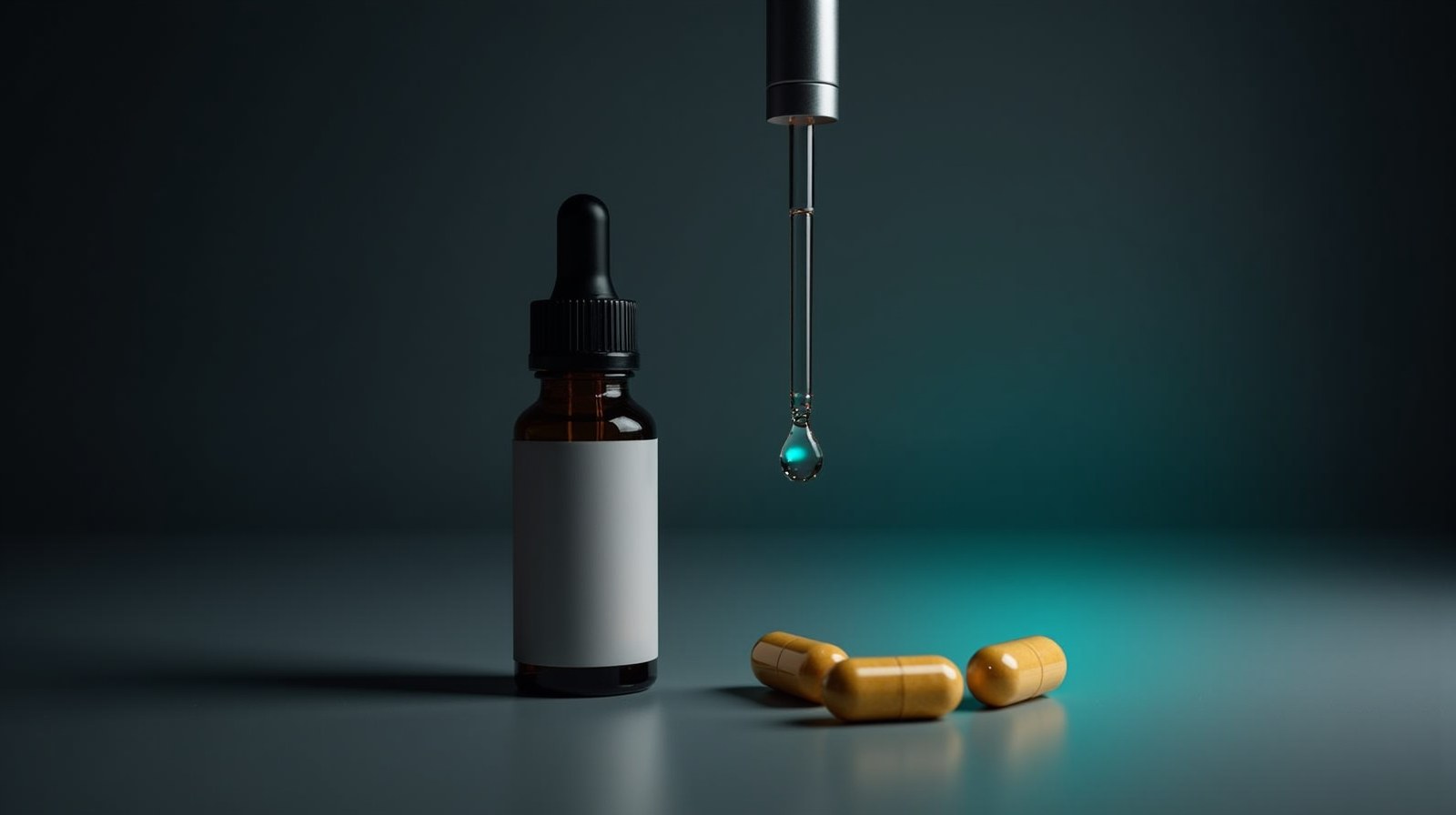
Walk into the weight-management aisle — or scroll five minutes on social media — and you'll see three main delivery formats: pills you swallow, drops you take under the tongue, and prescription injections. Here's what actually differs between them.
Key Findings
- Swallowed pills go through first-pass metabolism, where stomach acid and the liver break down part of the active ingredients before they reach the bloodstream
- Sublingual delivery bypasses first-pass digestion via thin, blood-vessel-rich tissue under the tongue
- Sublingual B12 and nitroglycerin are established examples of this delivery method in other areas of medicine
- Prescription injections (GLP-1s) work through a completely different mechanism, requiring a prescription and medical supervision
Pills and capsules
Swallowed supplements pass through the digestive system, where stomach acid and liver metabolism ("first-pass metabolism") break down a portion of the active ingredients before they ever reach the bloodstream. That's not necessarily a dealbreaker, but it does mean absorption is variable and often lower than the dose on the label suggests.
Sublingual drops
Products like Slenderiiz are taken under the tongue, where the tissue is thin and rich in blood vessels. The idea behind sublingual delivery is that some compounds can be absorbed more directly into the bloodstream, bypassing first-pass digestion. This is an established delivery method in other areas of medicine — sublingual vitamin B12 and certain heart medications (like nitroglycerin) work this way — though the extent of absorption depends heavily on the specific ingredients involved, and not everything absorbs well sublingually.
Prescription injections (GLP-1s, etc.)
Injectable prescription medications work through a completely different mechanism — they're pharmaceutical drugs that directly regulate appetite hormones, require a prescription and medical supervision, and typically cost significantly more per month. They're a different category entirely from over-the-counter drops or supplements, with a much larger evidence base behind their specific mechanism (GLP-1 receptor agonism) — they aren't directly comparable to sublingual supplements in either mechanism or strength of evidence.
What this means for you
If cost, convenience, and avoiding needles matter to you, a sublingual option like Slenderiiz is a lower-commitment way to add structure to a weight-management routine. If you have significant weight to lose or a medical condition driving weight gain, a conversation with your doctor about prescription options is worth having — the two approaches aren't mutually exclusive.
What to look for in any drop-based product
- Clear ingredient list — avoid proprietary blends that hide individual dosages
- A company transparent about what's clinically studied vs. traditionally used
- A realistic use plan (food guidance, water intake, timing) rather than "drops alone"
Individual results vary and are not guaranteed. This content is educational, not medical advice.